Build Intelligent AI ApplicationsThat Think, Reason and Act.
Master Generative AI, Large Language Models, Retrieval-Augmented Generation, and Agentic AI through an intensive 80-hour, hands-on training program designed to transform foundational programming skills into practical AI application development expertise.
Learn to build intelligent assistants, automate complex workflows, develop multi-agent systems, connect AI applications to external tools, and deploy secure, production-oriented AI solutions using modern technologies.
Structured data & async API pipelines
List of recruiters in AI Solution Engineering























Hover or click any node to inspect the workflow
› agent.orchestrate() → selecting tools & memory
Start Your Journey intoGenerative AI & Agentic AI
Step into the next generation of artificial intelligence with a practical, project-driven learning experience that prepares you to build real-world AI applications.
From Python programming and prompt engineering to intelligent AI agents, autonomous workflows, and production deployment, this course provides a structured pathway to developing practical AI engineering skills.
BATCH AVAILABILITY
Contact the nearest Livewire centre for upcoming schedules.
6 Advanced Modules + AI Foundations
Explore a structured curriculum covering the technologies, frameworks, and engineering practices used to develop modern Generative AI and Agentic AI applications.
AI Foundations
Code the Foundations of Intelligent Applications.
Build essential skills in Python programming, data structures, object-oriented programming, APIs, NumPy, Pandas, SQL, Git, GitHub, data visualisation, and Machine Learning fundamentals.
KEY TECHNOLOGIES & CONCEPTS
HANDS-ON OUTCOME
Data-driven Python & ML pipeline
Comprehensive, Practical and Career-Focused Learning
Hands-On AI Application Development
Gain practical experience developing intelligent applications through guided exercises, implementation tasks, and interactive coding sessions.
Learn Modern AI Frameworks and Protocols
Explore LangChain, LangGraph, Hugging Face, Ollama, MCP, A2A, and other technologies used to create connected and intelligent AI systems.
Build Real-World AI Solutions
Apply Generative AI and Agentic AI concepts to document intelligence, information retrieval, workflow automation, and multi-agent collaboration.
PARSE
Document Intel
RAG
Info Retrieval
ACT
Workflow Auto
SYNC
Multi-Agent
Project-Based Competency Development
Strengthen your technical skills through progressive project labs, evaluation tasks, mentor reviews, and an integrated capstone project.
Develop the Skills to Build, Connect, Evaluate and Deploy Intelligent AI Systems
Establish the programming and data-processing fundamentals required for Generative AI application development.
KEY TOPICS
- Python programming, collections, functions, and object-oriented programming
- CSV, JSON, file handling, web APIs, and Python environments
- NumPy, Pandas, data cleaning, and visualisation
- SQL, Git, GitHub, and command-line fundamentals
- Machine Learning concepts and model evaluation
PRACTICAL OUTCOME
Develop Python programs, process datasets, integrate APIs, and train a basic Machine Learning model.
Understand how Large Language Models operate and how to communicate with them effectively.
KEY TOPICS
- Transformer architecture, attention, tokens, and context windows
- GPT, Gemini, Claude, Llama, and Qwen model families
- Prompt engineering and few-shot prompting
- Structured JSON responses and Pydantic validation
- Model comparison, response quality, speed, and token cost
PRACTICAL OUTCOME
Build an AI-powered ticket or invoice information extractor with validated structured outputs.
Create functional AI applications that interact with external tools, APIs, and multimodal inputs.
KEY TOPICS
- Function calling, tool schemas, and error handling
- LangChain models, prompts, and output parsers
- Hugging Face and Ollama
- Cloud-hosted and local AI models
- Vision models, document extraction, and speech-to-text concepts
PRACTICAL OUTCOME
Develop tool-enabled LLM applications capable of processing requests and extracting information from documents.
Create knowledge-aware AI assistants that retrieve relevant information before producing responses.
KEY TOPICS
- Text embeddings, document chunking, and metadata
- Vector databases including Chroma and pgvector
- Retrieval pipelines, source citations, and hybrid search
- Query rewriting, reranking, and advanced document retrieval
- RAG evaluation, retrieval recall, faithfulness, and RAGAS
PRACTICAL OUTCOME
Build and evaluate an intelligent document Q&A assistant capable of retrieving relevant information from PDF manuals.
Develop AI agents capable of interacting with tools, managing workflows, and coordinating multiple intelligent components.
KEY TOPICS
- Agent loops, planning, memory, and ReAct patterns
- LangGraph states, nodes, edges, and checkpoints
- Human-in-the-loop approval mechanisms
- Multi-agent orchestration and agent collaboration
- Model Context Protocol (MCP)
- Agent-to-Agent (A2A) communication
PRACTICAL OUTCOME
Build tool-connected AI agents, multi-agent workflows, and an MCP-based integration with human approval controls.
Learn the engineering practices required to secure, package, deploy, monitor, and improve AI applications.
KEY TOPICS
- Prompt injection, data protection, and AI guardrails
- OWASP security considerations for LLM applications
- Fine-tuning concepts, LoRA, and QLoRA
- FastAPI, Streamlit, and Docker
- Tracing, latency, token-cost monitoring, and caching
- Responsible AI and DPDP Act fundamentals
PRACTICAL OUTCOME
Containerise an AI application, implement security tests, and add observability and cost-monitoring capabilities.
Consolidate the skills gained throughout the program into an integrated AI application.
KEY TOPICS
- Application architecture and documentation
- Technical review and issue resolution
- Deployment preparation and demonstration
- Project presentation and portfolio development
PRACTICAL OUTCOME
Present a functioning AI application with documented architecture, tested workflows, and a live demonstration.
Hands-On Projects with Industry-Oriented AI Engineering Practices
Intelligent Document Q&A Assistant
Transform Documents into Searchable Intelligence.
Develop a Retrieval-Augmented Generation application that searches technical manuals, retrieves relevant information, and generates context-aware answers with source references.
KEY APPLICATIONS
AI-Powered Ticket and Invoice Extractor
Convert Unstructured Information into Actionable Data.
Build an LLM-based extraction system that identifies important information from tickets or invoices and converts it into validated, structured JSON outputs.
KEY APPLICATIONS
refund_order(#4821)
Human-in-the-Loop AI Workflow
Automate Decisions While Maintaining Human Control.
Create an intelligent agent that prepares workflow actions, such as refund drafts, and waits for explicit human approval before proceeding.
KEY APPLICATIONS
Multi-Agent Research and Content System
Enable Intelligent Agents to Collaborate on Complex Tasks.
Develop a multi-agent application involving Researcher, Writer, and Reviewer agents that coordinate to complete a structured task.
KEY APPLICATIONS
MCP-Based Intelligent Application
Connect AI Agents to External Data and Tools.
Build an MCP server that exposes database-backed functionality to an AI client, enabling structured interaction between AI models and external systems.
KEY APPLICATIONS
Integrated Generative AI & Agentic AI Capstone
Build, Secure and Demonstrate an End-to-End AI Solution.
Develop a comprehensive application combining LLMs, RAG, agent workflows, connected tools, evaluation, security measures, and deployment practices.
KEY APPLICATIONS
Build Practical Skills Across the Generative AI and Agentic AI Technology Stack
Programming & Development Environments
Data Processing & Machine Learning
Large Language Models
Prompt Engineering
Generative AI Frameworks
Retrieval-Augmented Generation
Agentic AI Development
Agent Connectivity & Protocols
Model Optimisation
Application Development & Deployment
AI Security & Observability
From Programming Foundations to Intelligent AI Application Development
Build Your Foundations
Learn Python programming, data handling, APIs, development environments, and essential Machine Learning concepts.
Master Generative AI
Understand Large Language Models, develop effective prompts, validate model outputs, and build applications using modern LLM frameworks.
Develop Knowledge-Aware AI
Create RAG applications capable of retrieving information from external documents and answering questions with supporting references.
Engineer Intelligent Agents
Build autonomous and semi-autonomous AI workflows using agent orchestration, multi-agent collaboration, MCP, and A2A communication.
Deploy Responsible AI Applications
Implement security controls, evaluate application quality, package solutions with Docker, and monitor application performance.
Showcase Your Capstone
Complete your integrated AI project, present a live demonstration, and prepare technical documentation for your project portfolio.
Explore Career Pathways in Generative AI and Intelligent Automation
The program develops foundational and applied competencies relevant to emerging AI development and automation roles.
Potential Career Pathways
Job-role suitability depends on prior qualifications, practical proficiency, portfolio quality, and employer requirements.
Everything You Need to Know About the Program
Who is this course designed for?
The Generative AI & Agentic AI Builder – Fresher Track is designed for learners who want to develop practical programming and AI application development skills. It is relevant to students, recent graduates, and early-career professionals interested in Generative AI and intelligent automation.
Ready to Build the Next Generation of Intelligent AI Applications?
Transform your interest in Artificial Intelligence into practical development skills through an intensive, hands-on program covering Generative AI, Large Language Models, RAG, Agentic AI, and modern deployment technologies.
Take the first step toward developing intelligent AI applications with Livewire India's Generative AI & Agentic AI Builder Program.
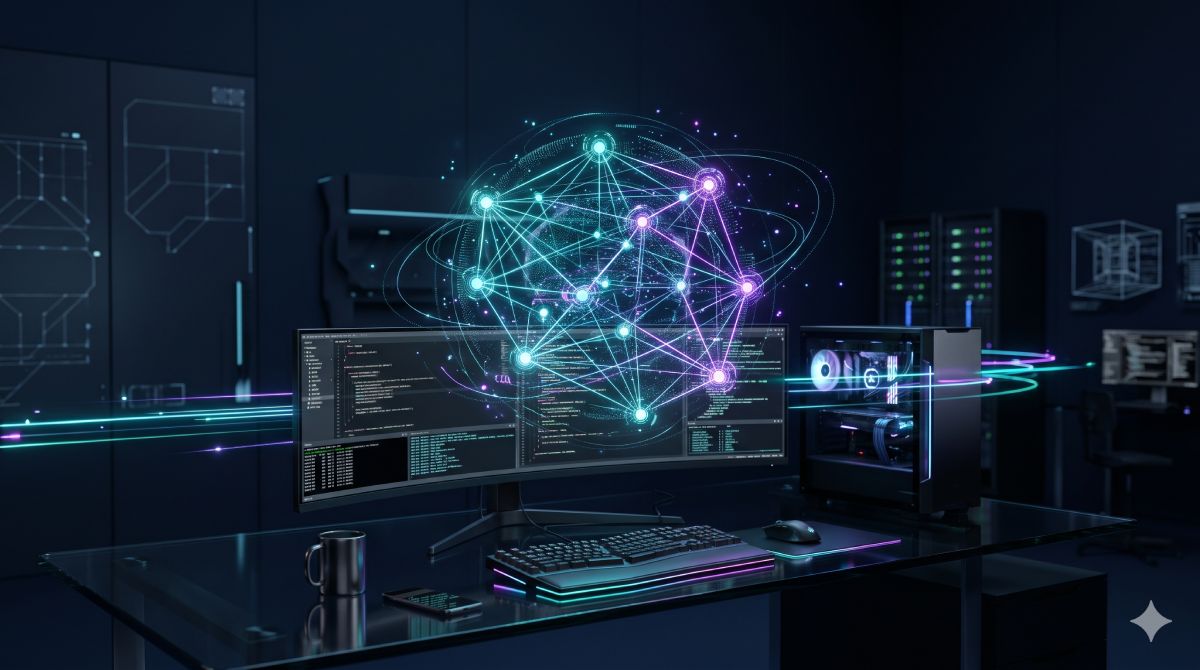

Learn to Build. Learn to Automate. Learn to Innovate.